If you've typed "website developer in Lucknow" or "best website developer near me" into Google today, chances are you're at a decision point. Maybe your business still doesn't have a website. Maybe the one you have looks like it was built a decade ago and never touched since. Or maybe you're a school administrator tired of managing student records in Excel sheets that keep getting corrupted or lost.
Whatever brought you here, I want to start with something simple: you don't need the biggest agency in the city. You need someone who understands your problem, builds the right solution, and sticks around when you need changes six months later.
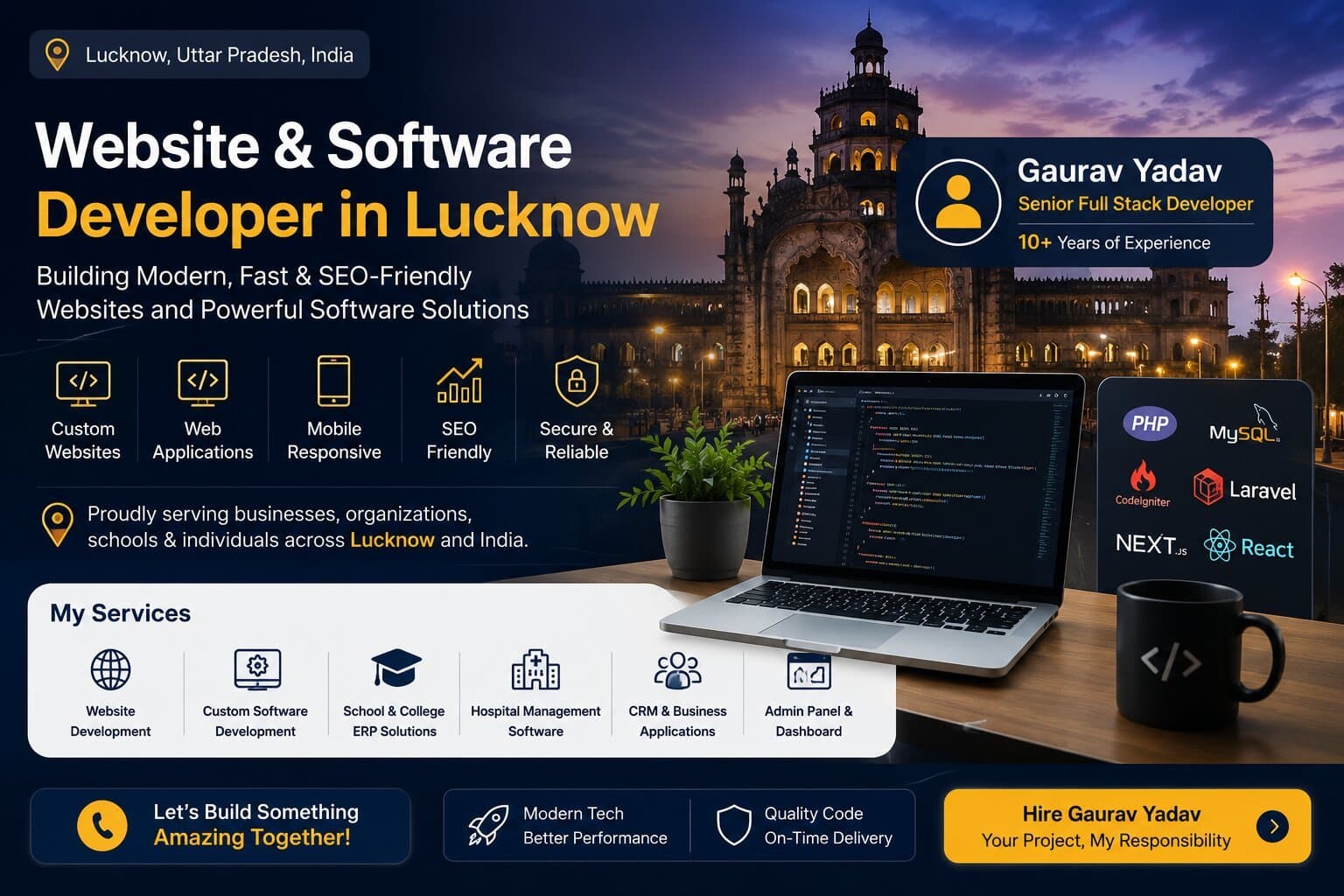
My name is Gaurav Yadav. I'm a full stack web developer and software developer based in Lucknow, Uttar Pradesh, with over 10 years of experience building websites, ERP systems, CRMs, and business software for clients across India. This article isn't a generic "top 10 things to look for in a developer" list. It's a real look at how I work, what I build, who I've worked with, and how you can figure out if I'm the right fit for your project.
Why Lucknow Businesses Need the Right Web Development Partner
Lucknow is changing fast. Walk through Gomti Nagar today and you'll see startups sharing office space with decades-old family businesses. Hazratganj still has its old-world charm, but the shops there now run Instagram ads and take online orders. Schools in Indira Nagar and Aliganj are digitizing admissions. Clinics in Alambagh are looking for booking systems. This shift means one thing clearly: a website is no longer optional, and neither is software that actually fits how your business runs.
The problem is that a lot of local businesses get burned early. They hire someone who builds a website using a template, hands over login details, and disappears. Six months later, the site is outdated, slow, or simply doesn't reflect what the business has become. I've had many clients come to me after exactly this experience, frustrated and cautious about hiring again.
That's the gap I try to close. Not just building a website, but building something that grows with your business, and being reachable when you need support.
Ready to build something that actually works for your business? Get in touch for a free consultation and let's talk about what you need.
Meet Gaurav Yadav — Your Website & Software Developer in Lucknow
I've spent over a decade in this field, working as both a freelance developer and inside larger technical teams handling government and enterprise-scale data systems. That mix matters. It means I understand how to build a clean, fast website for a small business, and I also understand how to design a database structure that won't fall apart when your school has 3,000 students or your CRM has years of customer records.
My work spans a wide range:
- Business and brand websites for local shops, clinics, consultants, and service providers
- School ERP and college management software, including admission tracking, fee management, and result processing
- Hospital management systems for clinics and small hospitals
- CRM software built around how a specific sales team actually works, not a generic template
- Political campaign software for tracking volunteers, voter outreach, and constituency data
- REST APIs and admin dashboards that connect multiple systems together
- SEO-friendly websites built to actually get found on Google, not just look nice
I work primarily out of Lucknow, but a good portion of my client base is spread across India. Development today doesn't require you to be in the same city as your developer — video calls, screen shares, and remote deployment tools make that unnecessary. What matters more is whether the person building your system understands your actual workflow.
Services Offered
Custom Website Development
Whether it's a single-page brand site or a multi-service business website, I build with a mix of clean design and solid backend structure. Every site is built to load fast, work on mobile, and be easy for you to update yourself later if needed.
School & College Management Software
This is one of the areas I get the most repeat work in. Schools across Uttar Pradesh, including many following UP Board (UPMSP) requirements, need software that handles UDISE codes, Samagra ID tracking, RTE quota management, and board-compliant certificate formats — not just a generic student database. I build this to match how Indian schools actually operate.
Hospital & Clinic Management Systems
Appointment booking, patient records, billing, and staff scheduling — built around how your clinic actually runs day to day, not a rigid template that forces you to change your process to fit the software.
CRM Development
Off-the-shelf CRMs often come loaded with features you'll never use, while missing the one workflow your sales team actually needs. A custom CRM means your team logs in and sees exactly what matters to how you sell.
Political Campaign Software
Volunteer coordination, constituency-level data tracking, outreach management — built for teams that need reliable, fast tools during high-pressure campaign periods.
PHP, Laravel & CodeIgniter Development
A large share of my work is in PHP, using both Laravel for modern, structured applications and CodeIgniter for lighter, faster-to-deploy projects, depending on what the project actually calls for.
Next.js & React Front-End Development
For projects where speed, SEO, and a modern user interface matter most, I build front-ends in Next.js and React, often connected to a PHP or Node backend via REST APIs.
Admin Panels & Dashboards
Almost every system I build includes some form of dashboard — a place where you or your team can see data, manage content, and make decisions without needing to touch code.
Not sure which of these fits your project? Reach out and describe what you're trying to build — I'll tell you honestly what makes sense.
Technologies & Tools I Work With
Clients don't usually care about the specific stack behind their website — they care about results. But if you're technical, or your team wants to know what's under the hood, here's what I regularly work with:
- Backend: PHP, Laravel, CodeIgniter 3, Node.js
- Frontend: Next.js, React, Alpine.js, Tailwind CSS
- Database: MySQL, with schema design built for scale, not just for launch day
- APIs: REST API design and integration, third-party API connections (payment gateways, SMS, PageSpeed Insights, and more)
- Hosting & Deployment: cPanel shared hosting, VPS deployment, performance tuning for budget-friendly hosting environments
- SEO & Performance: Schema markup (JSON-LD), Core Web Vitals optimization, technical SEO audits
One thing I've learned over the years: the "best" technology isn't always the newest one. A shared cPanel hosting plan with a well-optimized Laravel or CodeIgniter setup can outperform an over-engineered stack that costs five times more to host and maintain. I choose the stack based on your budget and goals, not to show off a resume.
My Development Process
People often ask what actually happens after they hire a developer. Here's a straightforward breakdown of how I work:
1. Understanding the Problem
Before writing a single line of code, I want to understand your actual business — how you currently manage things, what's broken, and what "done" looks like for you. This is often a call or an in-person meeting if you're based in Lucknow.
2. Planning & Structure
I map out the database structure, the pages or modules needed, and a realistic timeline. For bigger projects like ERP or CRM systems, this stage includes wireframes and a clear feature list so there's no confusion later.
3. Development in Phases
I build in phases rather than disappearing for weeks and returning with a finished product. You see progress, give feedback, and I adjust — this avoids the classic problem of a final product that doesn't match what you actually needed.
4. Testing
Every feature gets tested against real-world scenarios, not just the happy path. For school software, that means testing with actual admission data patterns. For CRMs, it means testing with realistic customer volumes.
5. Deployment & Handover
Once approved, I deploy to your hosting environment and walk you (or your team) through how to use it. You get documentation, not just a login page and a goodbye message.
6. Ongoing Support
Software isn't "finished" the day it launches. I stay available for fixes, updates, and improvements — many of my clients have worked with me for years across multiple projects.
Why Choose a Local Freelance Developer Over a Big Agency
This is a fair question, and I'll answer it honestly rather than just making a sales pitch.
Big agencies often have more manpower, which can help for very large projects with tight deadlines. But you frequently end up talking to a project manager instead of the person actually writing your code, and costs scale up quickly because you're paying for overhead, not just development time.
A freelance developer like me means you're talking directly to the person building your system. Decisions happen faster because there's no internal chain of approvals. And because I'm based in Lucknow, meeting in person — whether you're in Gomti Nagar, Hazratganj, or anywhere nearby — is genuinely possible when it helps to sit down and go through requirements face to face.
The tradeoff is capacity — I take on a manageable number of projects at a time so that quality doesn't slip. If your project needs a dozen developers working in parallel, that's a different conversation. But for most businesses, schools, and clinics reading this, a focused, experienced individual developer is often the more practical and cost-effective choice.
Serving Lucknow and Beyond — Local Areas I Work With
While a lot of my client meetings happen digitally, being based in Lucknow means I understand the local business environment well, and in-person meetings are possible across the city, including:
- Gomti Nagar — startups, agencies, and corporate offices
- Hazratganj — retail businesses and consultancy firms
- Alambagh — clinics, small businesses, and local service providers
- Indira Nagar — schools and residential-area businesses
- Jankipuram — growing residential and commercial establishments
- Aliganj — educational institutions and family businesses
- Ashiyana — local service businesses and startups
- Vikas Nagar — small and medium enterprises
Beyond Lucknow, I regularly work with clients across Uttar Pradesh and other parts of India entirely remotely. Location isn't a barrier to a good working relationship — clear communication and reliable delivery are what actually matter.
Pricing Approach — What Affects Your Project Cost
I won't list exact numbers here because honestly, that would be misleading — the right price depends entirely on your specific project. But here's what generally affects cost, so you can think it through before a conversation:
- Scope: A five-page business website costs far less than a full ERP system with multiple user roles and modules.
- Custom features vs. standard features: Custom workflows, integrations, and reports take more time than standard pages.
- Design complexity: A simple, clean design is faster to build than a highly custom, animation-heavy interface.
- Ongoing support needs: Some clients want a one-time build; others want continued monthly support and updates.
- Timeline: Rushed timelines sometimes mean adjusted pricing due to the extra hours required.
My general approach is to give you a clear, itemized estimate after understanding your requirements — no vague quotes, no hidden charges added later.
How to Hire Me — Getting Started
If you've read this far, you're probably seriously considering your options. Here's how the process typically starts:
- Reach out with a short description of what you need — a website, ERP system, CRM, or something else.
- We talk — either a call or, if you're in Lucknow, an in-person meeting to go through your requirements properly.
- You get a proposal — a clear breakdown of what will be built, the timeline, and cost.
- We build it together — phase by phase, with your feedback along the way.
There's no pressure and no obligation in that first conversation. Most of my long-term clients started with a simple question they weren't sure I could answer.
Ready to start? Contact me here or explore my services page to see the full range of what I build.
Frequently Asked Questions
Who is the best website developer in Lucknow?
There's no single "best" for everyone — it depends on your project and what you value in a working relationship. If you want someone with over a decade of experience across websites, school ERP systems, and custom software, along with direct, responsive communication, Gaurav Yadav is worth talking to.
How much does it cost to build a website in Lucknow?
Costs vary widely based on the type of website, number of pages, design complexity, and features like booking systems or payment integration. A basic business website costs considerably less than a custom ERP or CRM platform. The best way to get an accurate number is a short consultation about your specific needs.
Can a freelance developer in Lucknow build software for clients outside Uttar Pradesh?
Yes, absolutely. Most software and website development today happens remotely regardless of location. I regularly work with clients across India using video calls, shared project boards, and remote deployment — being based in Lucknow doesn't limit who I can work with.
What is the difference between PHP and Next.js for a business website?
PHP frameworks like Laravel and CodeIgniter are well suited for database-heavy applications, admin panels, and content management systems. Next.js is better suited for fast-loading, highly interactive, SEO-optimized front-end experiences. Many modern projects actually combine both — a Next.js front-end talking to a PHP backend through REST APIs. The right choice depends on your specific goals.
Do schools in Lucknow need custom ERP software?
Many schools are still managing records through spreadsheets or paper files, which becomes harder to sustain as student numbers grow. A custom school ERP system, built around UP Board requirements like UDISE codes and RTE quota tracking, can significantly reduce administrative workload and errors compared to generic or manual systems.
How long does it take to build a business website?
A straightforward business website typically takes a few weeks from requirement gathering to launch. More complex projects like ERP systems or CRMs take longer, usually a few months, depending on the number of features and integrations required.
Do you provide ongoing support after the website or software is launched?
Yes. Most of my clients continue working with me well after launch for updates, new features, and maintenance. Software is rarely a one-time build — it evolves as your business does.
Final Thoughts
Building a website or piece of software isn't just a technical task — it's a decision that affects how your business runs for years afterward. Whether you're a school administrator in Aliganj trying to get away from spreadsheet chaos, a shop owner in Hazratganj wanting an online presence that actually converts, or a growing agency in Gomti Nagar that's outgrown generic tools, the right development partner makes a measurable difference.
I'm Gaurav Yadav, a full stack web developer and software developer based in Lucknow with over 10 years of experience building websites, ERP systems, CRMs, and custom software for clients across Uttar Pradesh and India. If your business, school, or organization needs something built properly — and supported long after launch — I'd genuinely like to hear about your project.
Get in touch today for a free, no-obligation consultation, or browse my portfolio to see more of the work I've done.
Related Articles
2026-07-28 · 11 min read
Website Developer in Lakhimpur – Web, App & Software
Looking for a website developer in Lakhimpur? Here's an honest, no-jargon guide for local shops, schools, clinics, and traders — what to check before hiring, real costs, whether you actually need a mobile app, and how to pick the right web design or software partner for your business
Read More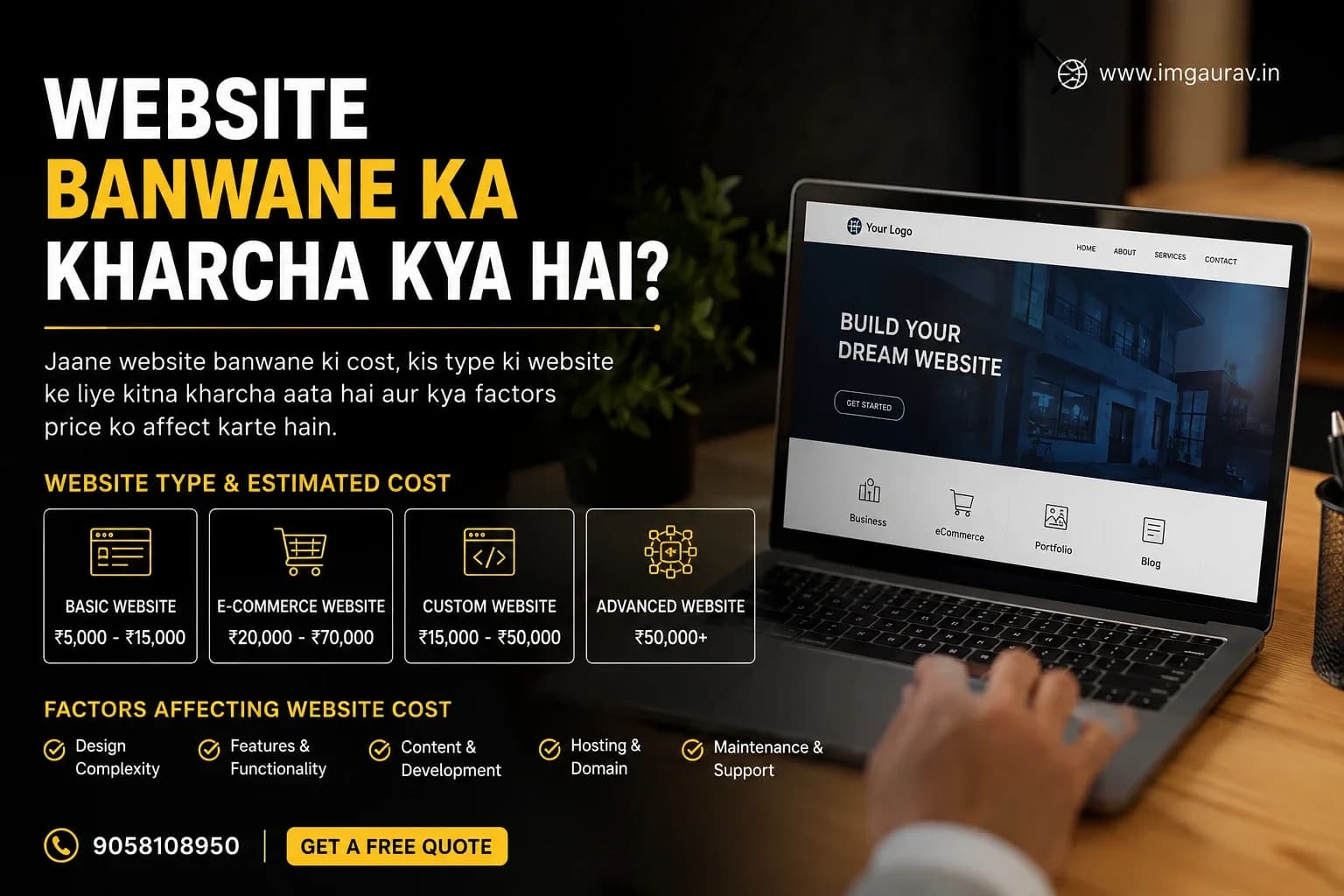
2026-08-04 · 9 min read
Website Banwane Ka Kharcha Kitna Aata Hai? Complete Guide 2026
India mein ek basic business website banwane ka kharcha ₹5,000 se ₹25,000 tak hota hai, standard website ₹25,000-₹60,000, aur premium ya ecommerce website ₹60,000 se ₹3,00,000+ tak ja sakti hai. Cost design complexity, pages ki sankhya, hosting, aur developer ke experience par depend karti hai.
Read More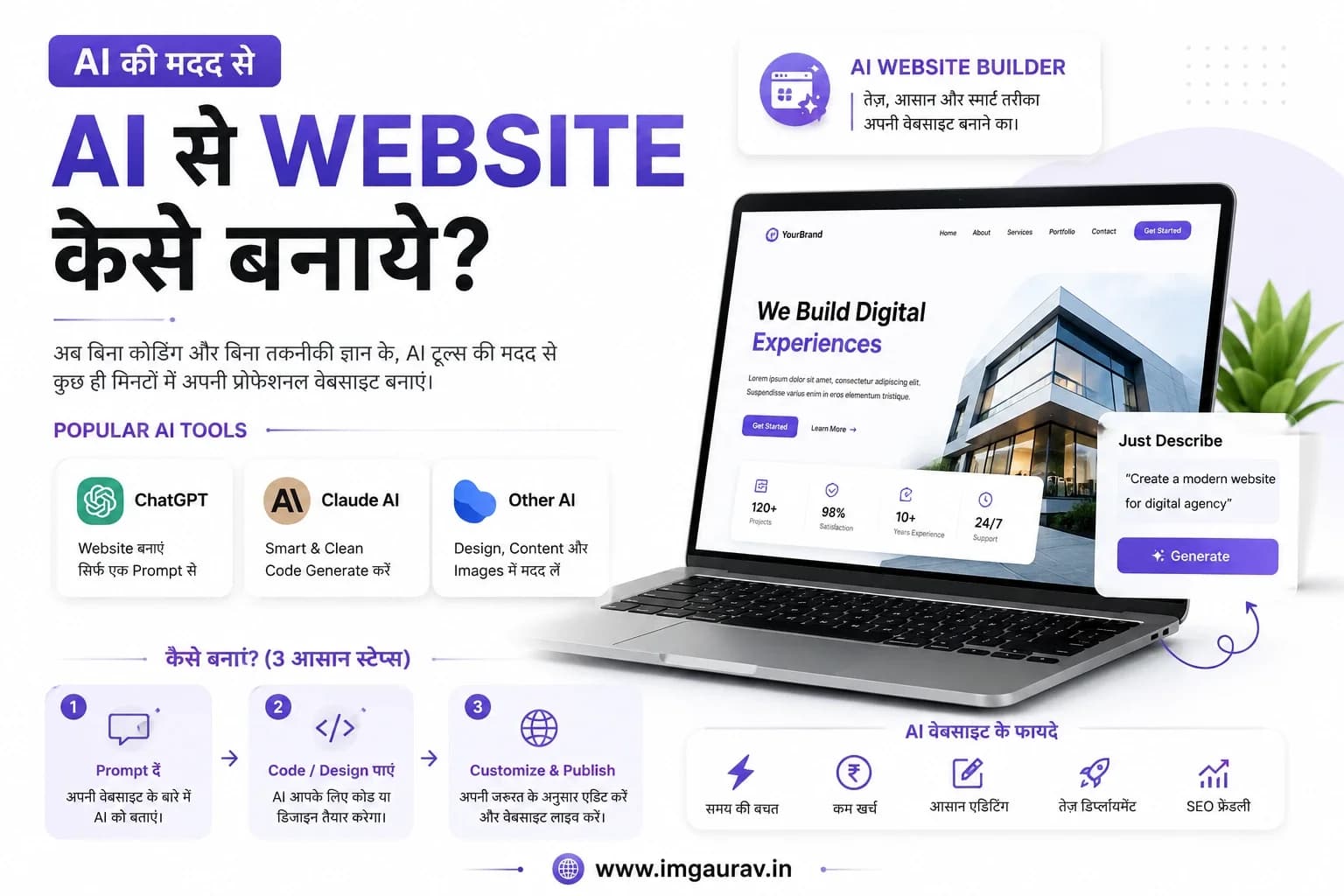
2026-08-04 · 9 min read
AI Se Website Kaise Banaye? ChatGPT, Claude, Lovable Se Complete Guide
AI se website Claude ya Lovable jaise tools se ban jaati hai bas prompt likhein, code ready. Coding zaruri nahi, lekin professional site ke liye developer ki madad best hai.
Read MoreComments
Be the first to comment.